Coding agents have shifted where our time goes. We spend less of it wiring up implementations and more of it thinking about the design, how the pieces fit, what the system actually needs to do. That’s the idea, at least. What we see in practice is people handing over the thinking too, not just the typing. The assistant picks the approach, and since it can build almost anything you ask for, it tends to build something big: a fine-tuned model, a vector store, a few moving parts to maintain, for a problem a single well-placed prompt could have handled. RAG versus fine-tuning is exactly the kind of decision that gets skipped this way. It’s worth making on purpose, so this post walks through when each one earns its place.
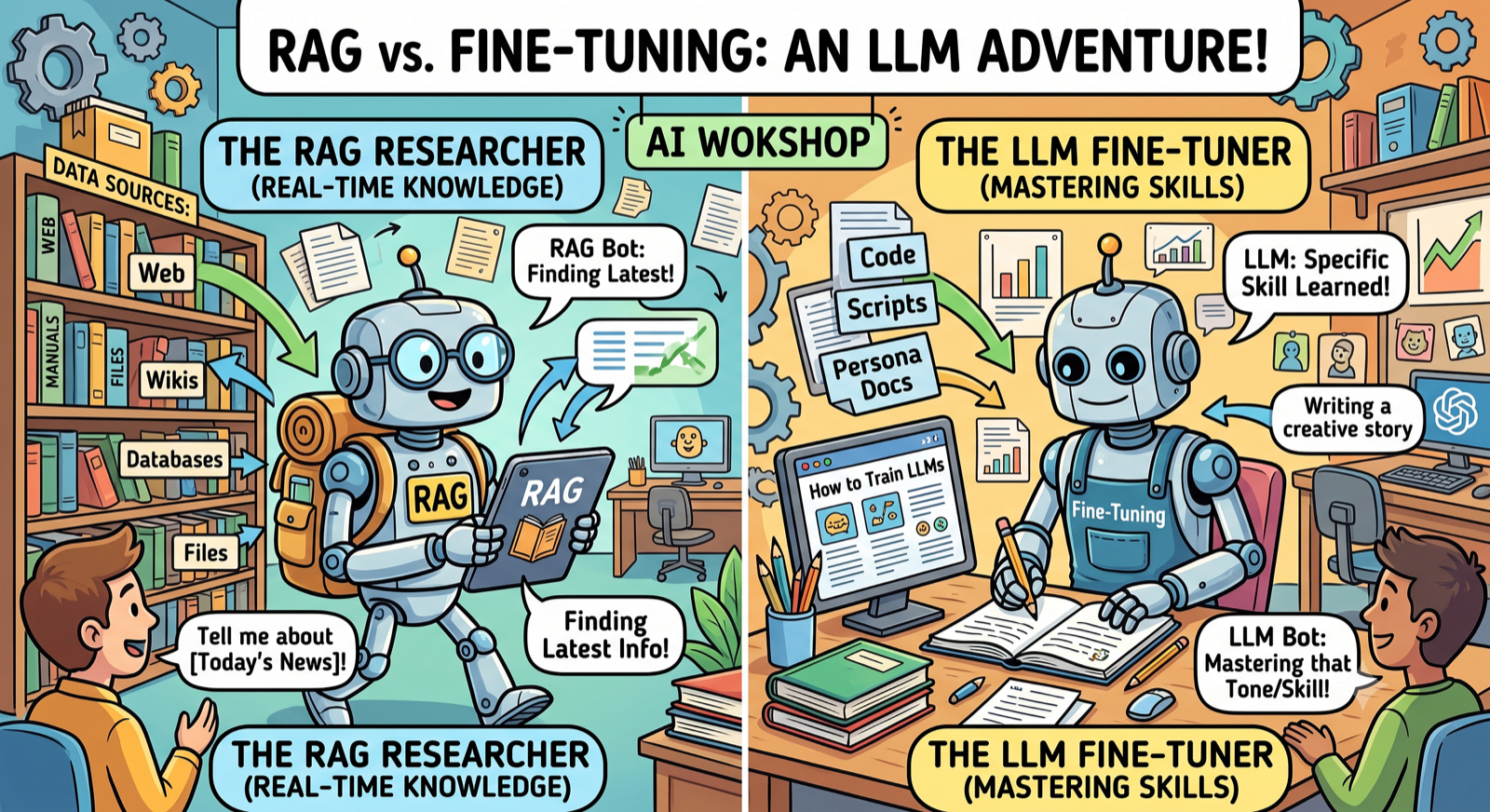
Image Generated by AI
RAG vs Fine-Tuning: How to Choose for a Custom Task
A team ships a support chatbot. It works in the demo. Two weeks later, users complain that it quotes an old refund policy that changed last month. One engineer says, “Let’s fine-tune it on our docs.” Another says, “No, we need RAG.” Both are trying to fix the same bug, but they’re proposing very different machines. The choice between RAG and fine-tuning is really a choice about which part of the system you change.
What fine-tuning actually does
Fine-tuning takes a model that already exists and keeps training it on your own examples. You show it input–output pairs: a question and the answer you want, a ticket and its correct category, a message and the reply in your house style. The training nudges the model’s internal weights so it leans toward those patterns next time.
Here’s the key point. Fine-tuning changes how the model behaves. It’s good at teaching form, tone, and task shape. If you want every answer in one fixed JSON structure, or in a specific brand voice, or sorted into one of eight fixed labels, fine-tuning presses that behavior into the model itself.
What it doesn’t do well is store fresh facts. The knowledge you train in is frozen at training time. When your refund policy changes, the fine-tuned model won’t know unless you train it again. You also need labeled examples, often many hundreds, plus some compute. Methods like LoRA (a parameter-efficient approach that trains a small set of extra weights instead of the whole model) cut the cost a lot, but you still run a training job and host a model.
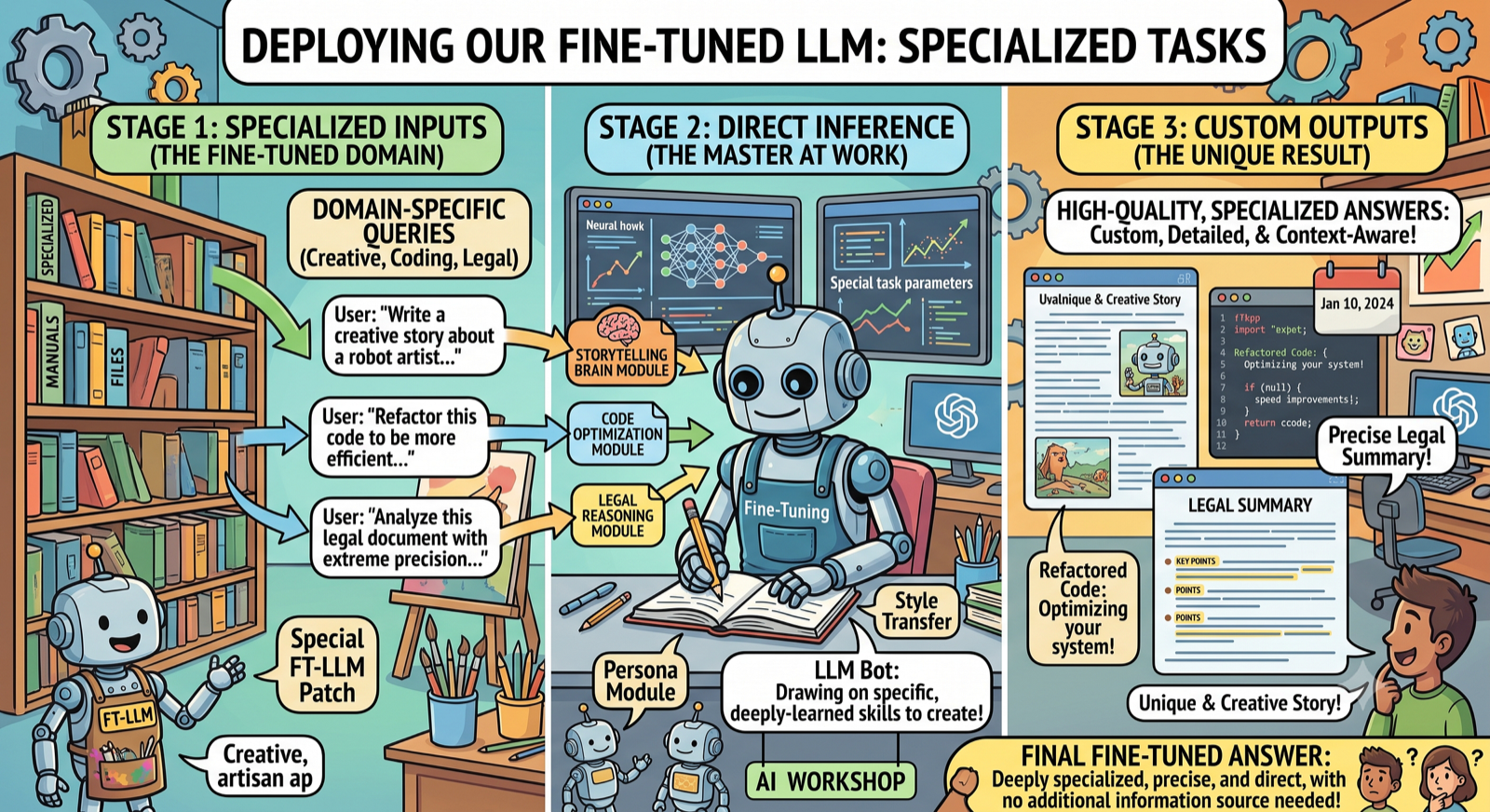
Image Generated by AI
What a RAG system actually does
RAG stands for retrieval-augmented generation. Instead of changing the model, you change what it can see at the moment it answers.
Here’s the flow.
- You store your documents in a searchable index, usually a vector database that finds text by meaning rather than exact words.
- When a user asks something, the system searches that index, pulls the few most relevant chunks, and pastes them into the prompt as context.
- The model then answers using that material in front of it.
So RAG changes what the model knows right now, not how it behaves. Update a document, and the next answer reflects it, no retraining. You can also show which source each answer came from, which matters when someone needs to trust or audit the result.
The trade-offs live in retrieval. If the search returns the wrong chunk, the model answers from bad context. Long context costs more per query and can slow the response down. And RAG won’t teach the model a new skill or a new output format, it only feeds it better information.
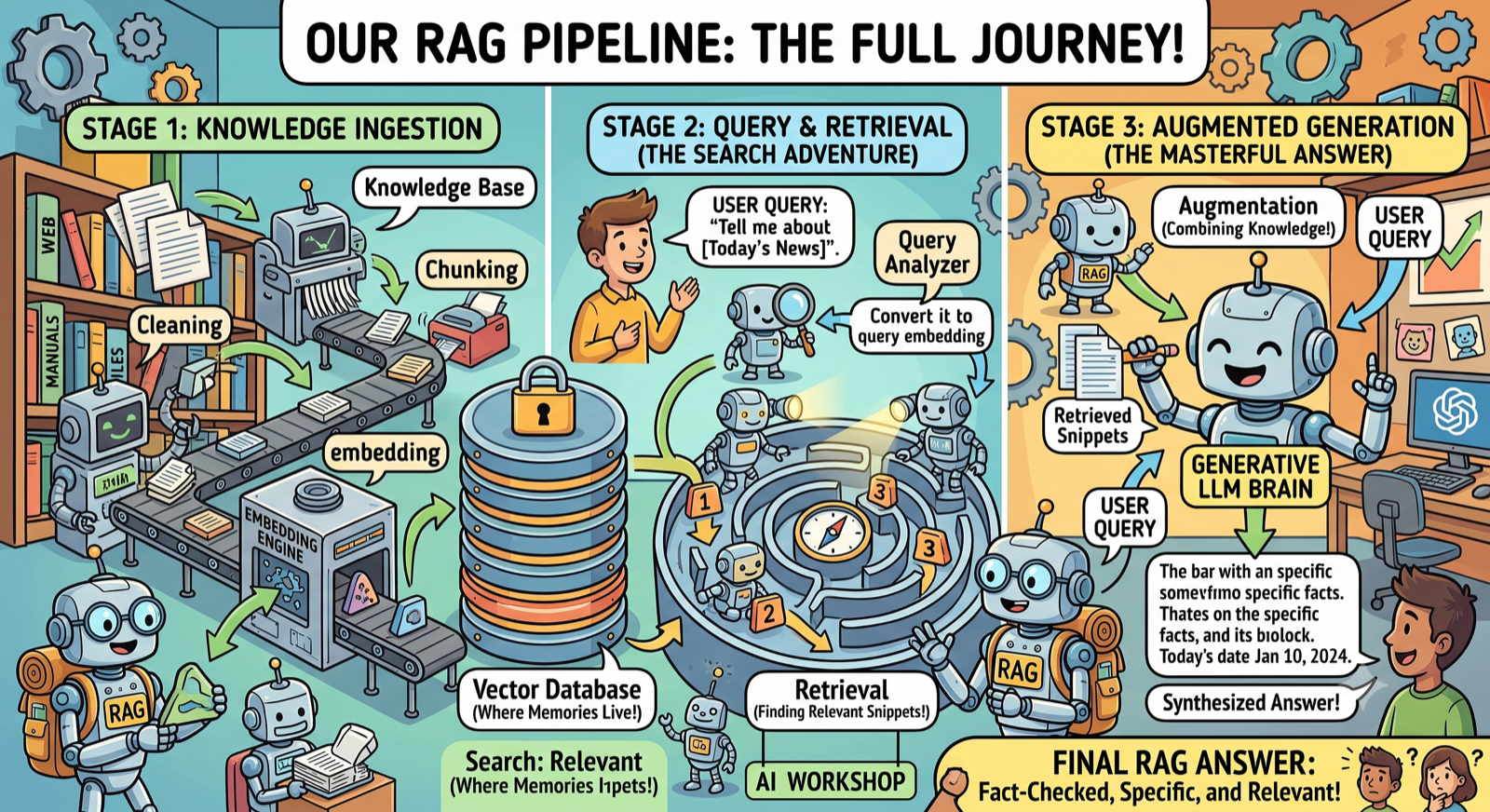
Image Generated by AI
The one question that decides most cases
Before comparing features, ask a plainer question: is your problem about knowledge or about behavior?
If the model keeps getting facts wrong or out of date, that’s a knowledge problem. RAG is usually the answer.
If the model knows enough but responds in the wrong shape, the wrong tone, or can’t do the task reliably, that’s a behavior problem. Fine-tuning is usually the answer.
When fine-tuning wins
Pick fine-tuning when the task is a stable, repeated behavior and you have examples of it done right.
Some clear cases:
- Strict output format. You need every response as valid JSON in one schema, every time. A fine-tuned model holds that shape far more reliably than a prompt full of instructions.
- Fixed classification. Sorting tickets, tagging content, or routing messages into a set list of categories.
- Consistent voice or style. A tone that’s hard to describe in words but easy to show with a hundred examples.
- Shorter prompts, lower latency. If you’d otherwise repeat long instructions on every call, baking them in can make each request cheaper and faster.
- A narrow skill the base model does poorly. A domain’s phrasing, a specialized rewrite task, or a format the model keeps breaking.
The most common scenario would be when the knowledge isn’t changing much, but the behavior needs to be locked in.
When RAG wins
Pick RAG when the answer depends on information that lives outside the model, especially if it changes frequently.
Some clear cases:
- Changing facts. Product docs, prices, policies, schedules or anything you edit often. RAG reads the current version while a fine-tuned model remembers the old one.
- A large or growing knowledge base. Thousands of documents you can’t fit into a single prompt or a training set cleanly.
- Answers that need sources. Legal, medical, finance, internal support cases where you must point to where the answer came from.
- Per-user or per-tenant data. You can restrict which documents a given user’s query is allowed to retrieve. That’s hard to do once facts are baked into shared weights.
- No labeled training data yet. You have documents but not clean input–output pairs. RAG lets you start today.
The most common scenario would be when the behaviour is fine, but the model needs the right, current information in front of it.
RAG vs fine-tuning: why the answer is often both
These two approaches solve different problems, so real systems frequently use them together.
Take that support bot from the start. RAG pulls the current help article that answers the user’s question, so the facts are right and up to date. Fine-tuning shapes how the bot replies. The tone, the structure, the way it says “I don’t know” instead of guessing. RAG handles the what while fine-tuning handles the how.
You don’t have to start with both. Most teams reach for RAG first because it’s faster to stand up and easier to update, then fine-tune later if the response quality or format still isn’t where they need it.
Well that solves a huge mystery for me. Hope you found the blog insightful.