Imagine your data as a sprawling city full of winding streets, hidden alleys, skyscrapers of documents, and bustling intersections of emails, PDFs, and reports. Finding the exact piece of information you need in this city could feel overwhelming, like searching for a single café in a metropolis without a map. This is where LlamaIndex steps in: it’s the city’s ultra-intelligent navigation and information system, guiding you straight to your destination, no matter how complex the route.

In this blog, we’ll take a beginner-friendly tour of the architecture behind LlamaIndex, using the smart city analogy to explain why it’s such a powerful tool for data retrieval and querying especially when working with large language models (LLMs) like GPT-4.
What is Llama Index?
LlamaIndex acts like the GPS and traffic control center of your data city. While LLMs are like expert drivers, they can’t see every street or shortcut in your private city. LlamaIndex connects all your city’s roads, your documents, databases, and files so your AI can navigate directly to the right spot, every time you ask a question.
Step-by-step Architecture of Llama Index
1. Data Ingestion
First, LlamaIndex sends out surveyors (data connectors) to map every corner of your city. Whether it’s a PDF skyscraper, a database avenue, or a web page park, these connectors chart out all your data and bring it into a unified city map.
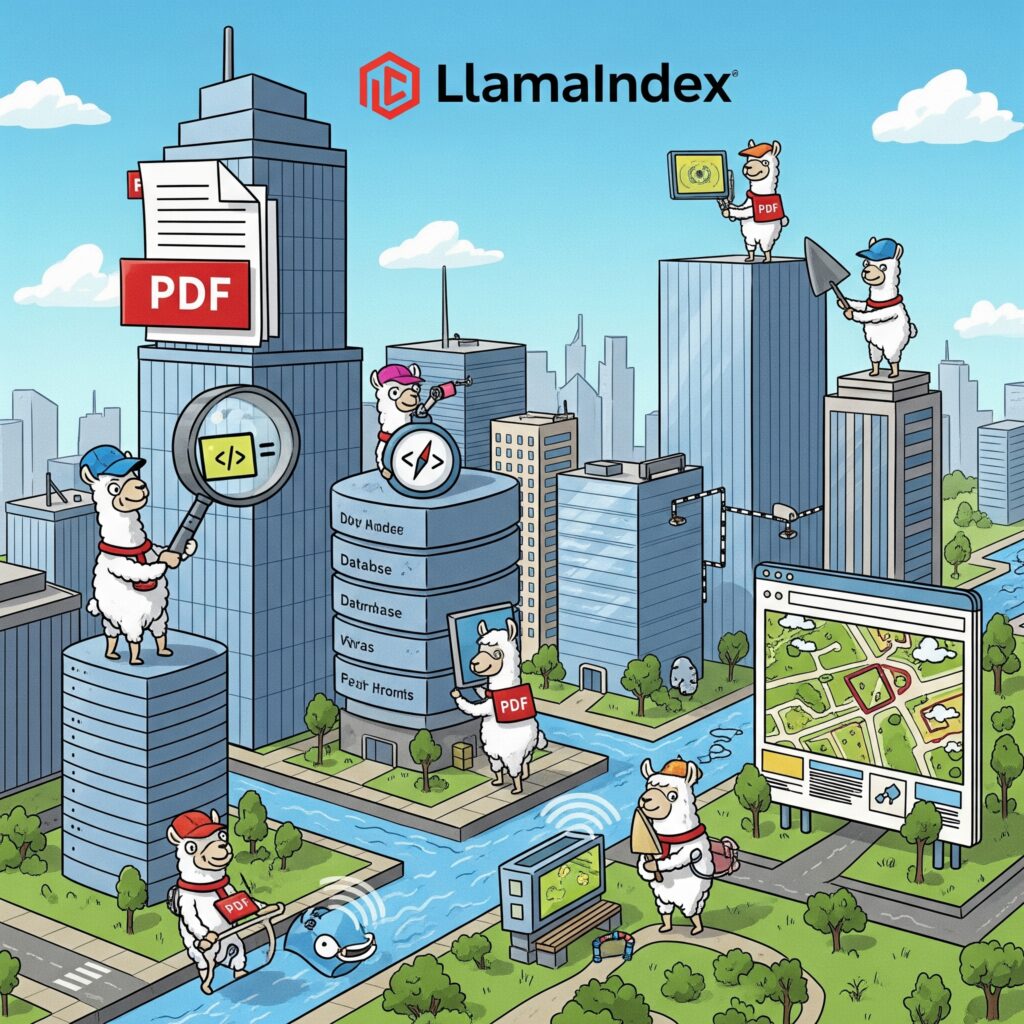
2. Parsing and Chunking: Dividing the City into Blocks
Once mapped, LlamaIndex divides the city into manageable blocks. Think of breaking the city into neighborhoods or districts. This makes it easier to pinpoint exactly where to look when someone asks for directions.
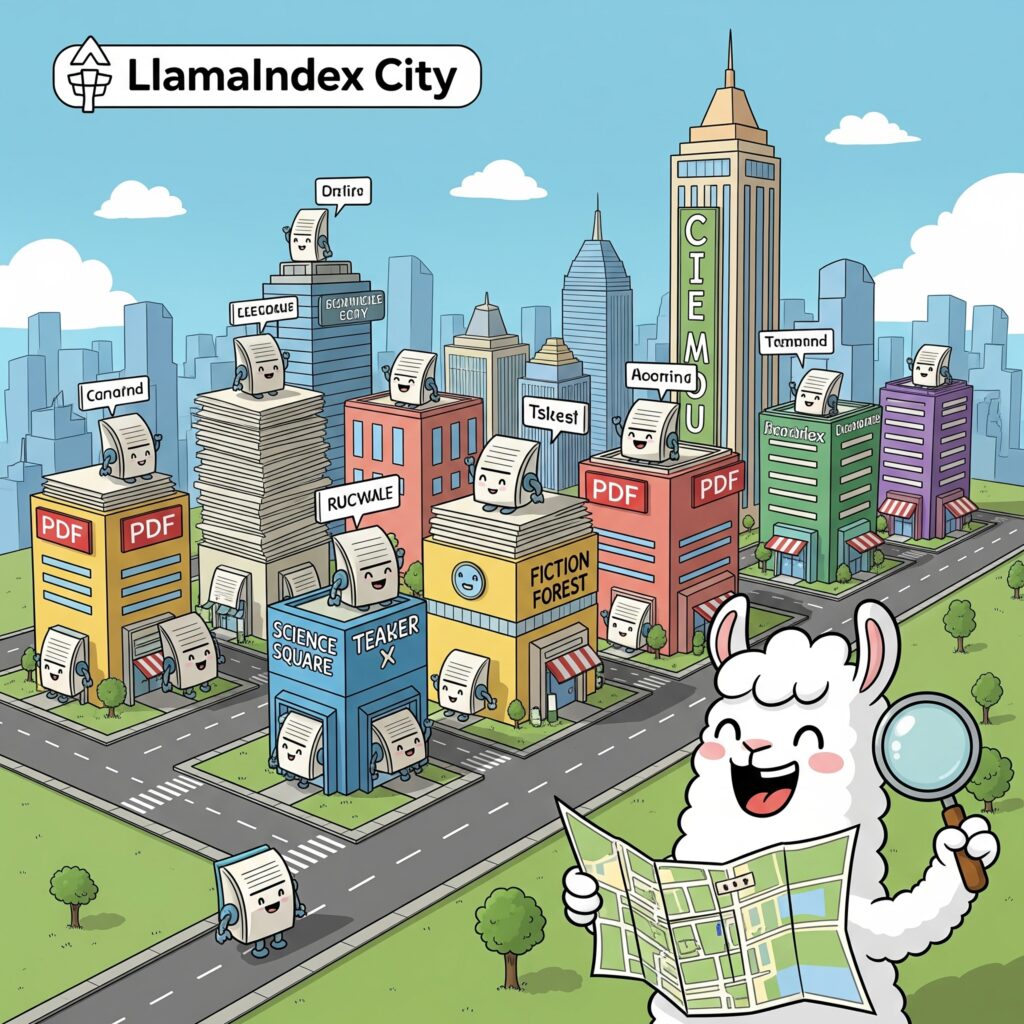
3. Indexing: Assigning Smart Addresses
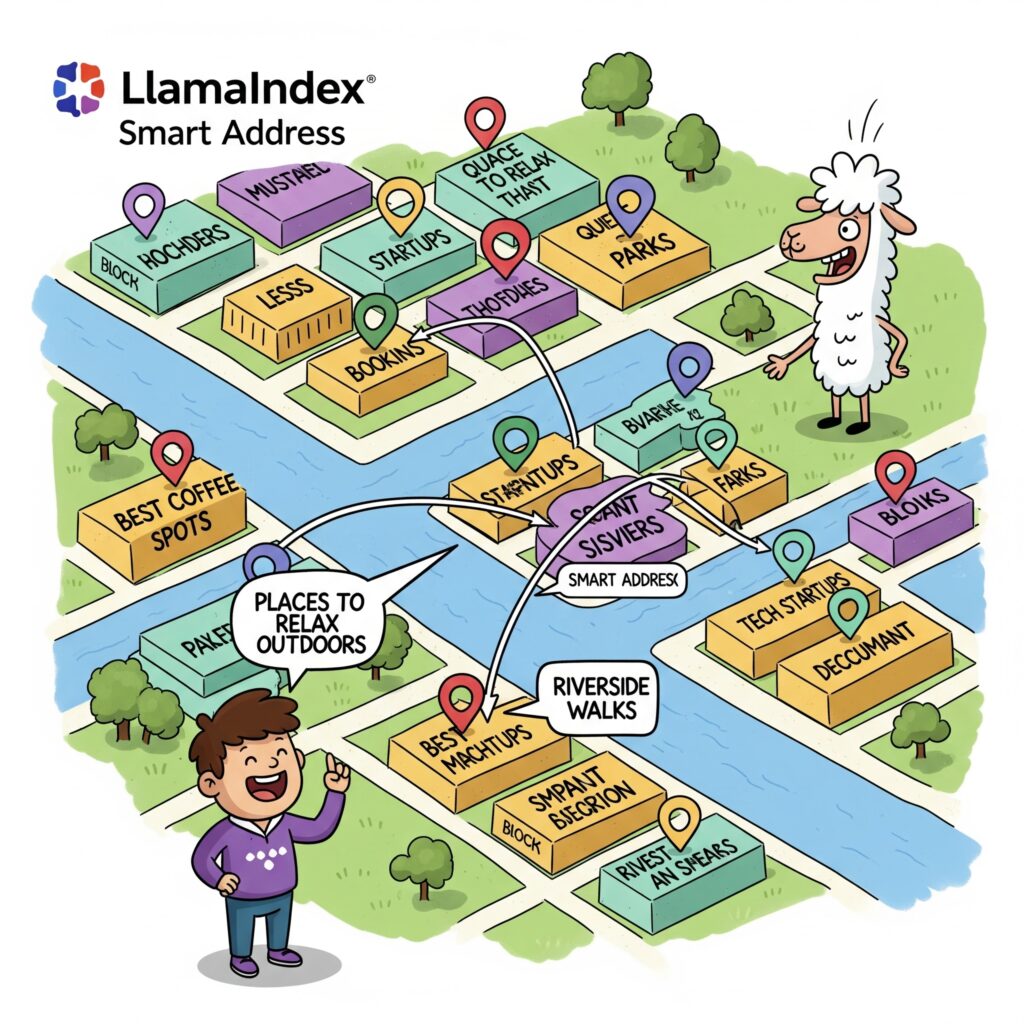
Now, each block gets a smart address, not just a street name but a digital tag (vector embedding) that describes what’s inside. For example, the block might incorporate best coffee spots, tech startups, or quiet parks. These addresses are stored in a high-tech city directory (vector database), making it simple to find places based on their vibe, not just their name.
Semantic Search: If you ask for places to relax outdoors, the system can guide you to parks and riversides, even if those words aren’t in your question, because it understands the meaning behind your request.
4. Querying: Asking the City’s Smart Assistant
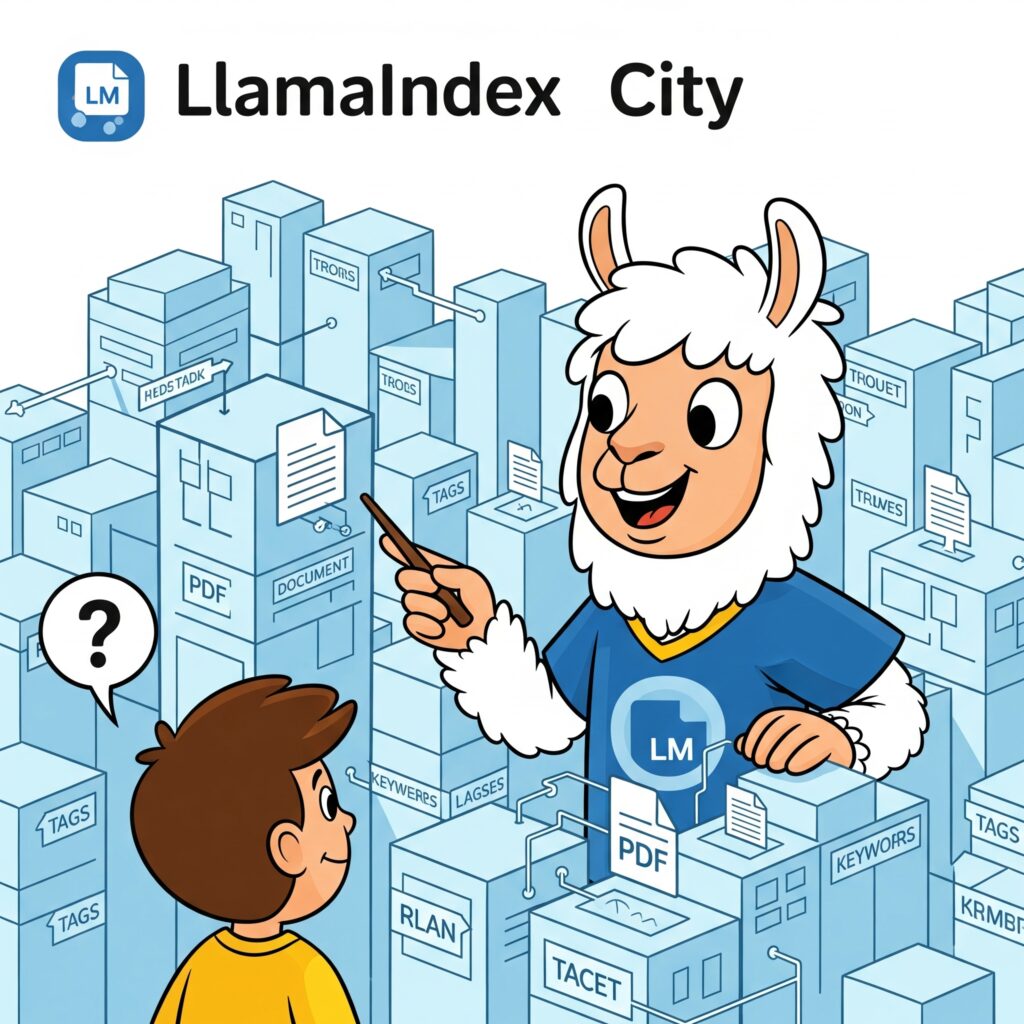
When you have a question, LlamaIndex acts like the city’s smart assistant. It translates your request into a digital signal, scans the city directory, and finds the most relevant blocks no matter how hidden or off-the-beaten-path they are.
5. Response: Getting Turn-by-Turn Directions
Finally, the smart assistant (LLM) uses the information from those blocks to give you clear, personalized directions or answers, ensuring you get exactly where you want to go in your data city.
Why Llama Index is so good at Data Retrieval
LlamaIndex stands out for data retrieval because it brings all your information whether it’s documents, databases, or web pages into one unified, searchable system. Instead of just matching keywords it uses advanced technology called embeddings to actually understand the meaning behind your questions so you get results that are relevant even if the exact words don’t match. Thanks to its use of vector databases, searches happen almost instantly, no matter how much data you have. You can also customize how your data is organized and how searches are performed, so the system fits your needs perfectly. LlamaIndex works smoothly with large language models, making sure the answers you get are not just fast, but also context-aware and up to date. Additionally, it easily connects with other tools and platforms, which makes it convenient to plug it into your existing workflow without hassle.
If you wanna learn more about Llama Index or similar frameworks that makes playing around with LLMs fun and enjoyable, be sure to checkout the courses offered by Hugging Face. I found the LLM and Agents courses pretty insightful. If you enjoyed reading the blog be sure to leave claps and comments. Hope you got a better understanding about Llama Index. Now start building your own RAG agents!