Choosing the right tools can make all the difference when building intelligent applications with language models. With so many frameworks out there, it’s easy to feel overwhelmed especially with two of the most popular options. LlamaIndex and LangGraph each promise to unlock new possibilities for your AI projects. In my last two blogs, I detailed the architecture, and simplified the working and use cases of Llama Index and LangGraph. In this blog, I’ll break down the real-world use cases where each framework shines, explore their unique strengths and limitations, and help you understand which one best fits your needs. Whether you’re aiming to supercharge your search capabilities or orchestrate complex, multi-step AI workflows, this guide will give you the clarity and confidence to move forward with the right foundation.
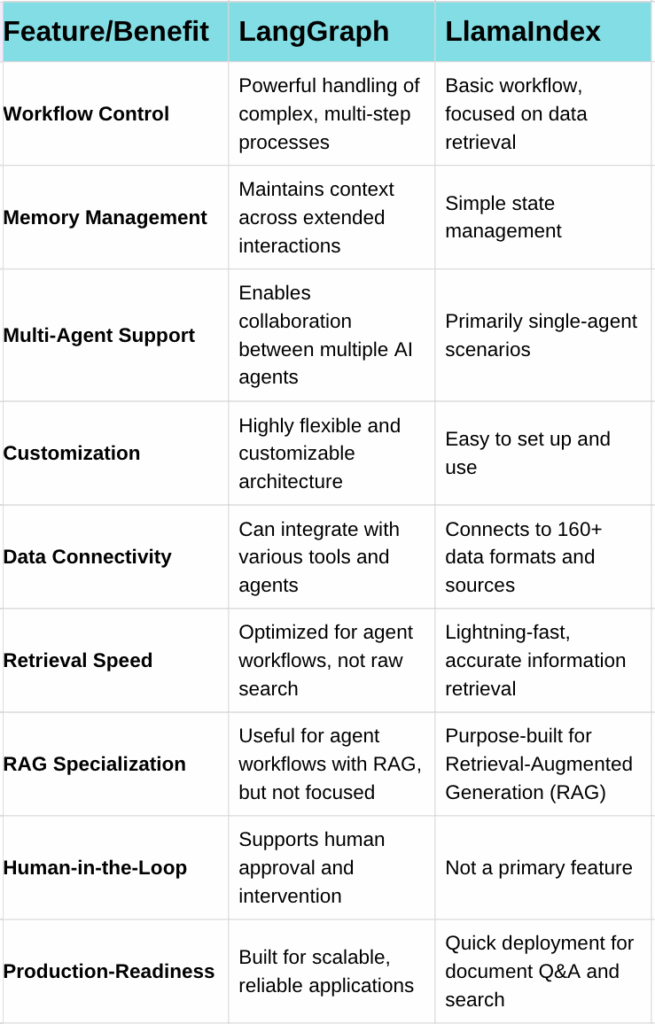
The fundamental difference between these frameworks comes down to their core purpose. LangGraph is designed for building complex, interactive AI systems that need to think, remember, and coordinate multiple tasks. LlamaIndex is built for making AI models smarter by giving them access to your data.
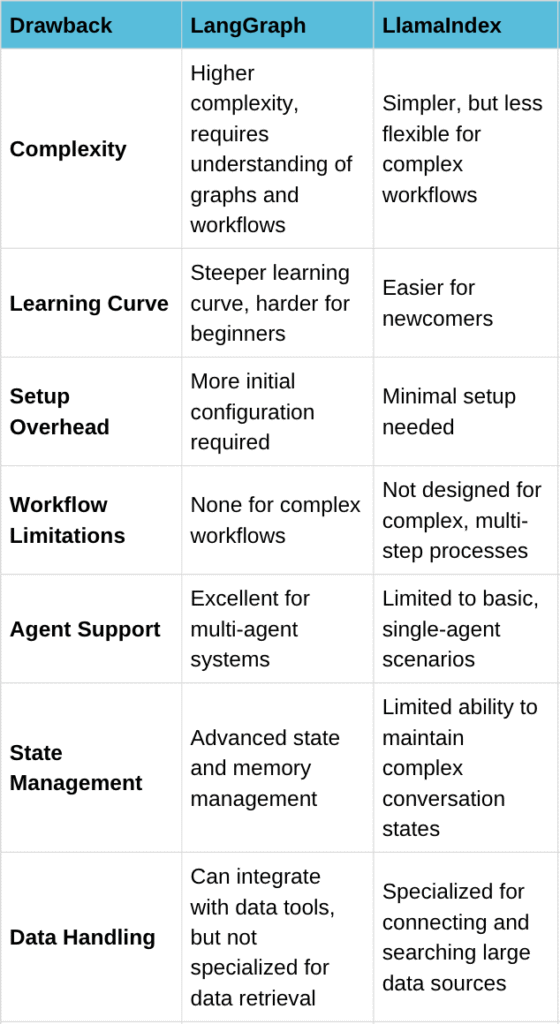
For beginners, LlamaIndex is generally easier to get started with. You can build a basic document Q&A system with just a few lines of code. LangGraph has a steeper learning curve because you need to understand concepts like graph structures, state management, and agent coordination.
Starting with LlamaIndex is like learning to ride a bicycle. Once you understand the basics of loading data and creating an index, you can quickly build useful applications. LangGraph is more like learning to conduct an orchestra, there are many moving parts that need to work in harmony
Performance Focus
LlamaIndex optimizes for search speed and retrieval accuracy. It’s designed to quickly find the most relevant information from large datasets and deliver it to your AI model. LangGraph focuses on workflow reliability and managing complex interactions between multiple components.
When to Choose Llama Index?
Building Knowledge-Based Applications: If you want to create a system that answers questions using documents, research papers, or any large collection of text, LlamaIndex is your best bet.
Quick Prototyping: When you need to demonstrate a concept quickly, LlamaIndex’s simplicity makes it ideal for rapid development.
RAG Applications: If your primary goal is to enhance AI responses with private or specific data, LlamaIndex is specifically designed for this purpose.
Enterprise Search: For building internal search systems that can understand natural language queries across company documents (or multiple pdfs in any other use case).
When to Choose LangGraph?
Multi-Agent Systems: If you need multiple AI agents working together like a research agent, a writing agent, and a fact-checking agent collaborating on a project.
Complex Conversations: For building chatbots or assistants that need to remember context across long conversations and make complex decisions.
Workflow Automation: When you need AI to handle multi-step processes that involve decision-making, tool usage, and human approval.
Custom Agent Behavior: If you need fine-grained control over how your AI agents behave and interact.
Comparison of their Benefits
Comparison of their Drawbacks
Conclusion
Both LangGraph and LlamaIndex are powerful frameworks, but they serve different purposes in the AI development world. LlamaIndex shines when you need to search through and retrieve information from large amounts of data, making it perfect for knowledge bases and document search systems.LangGraph excels when you need to build complex AI workflows with multiple agents working together.