In this era of AI advancements, it is easier than ever to teach yourself anything, let alone AI itself! This article details the roadmap I would recommend to anyone who wants to start out in AI and teach themselves all the skills necessary to start building their own products or crack job interviews. All the resources mentioned in this article are free of cost.
Please note that the resources mentioned in this article contain links to external sites like Youtube, Hugging Face and other Medium articles.
Recommended YouTube Channels
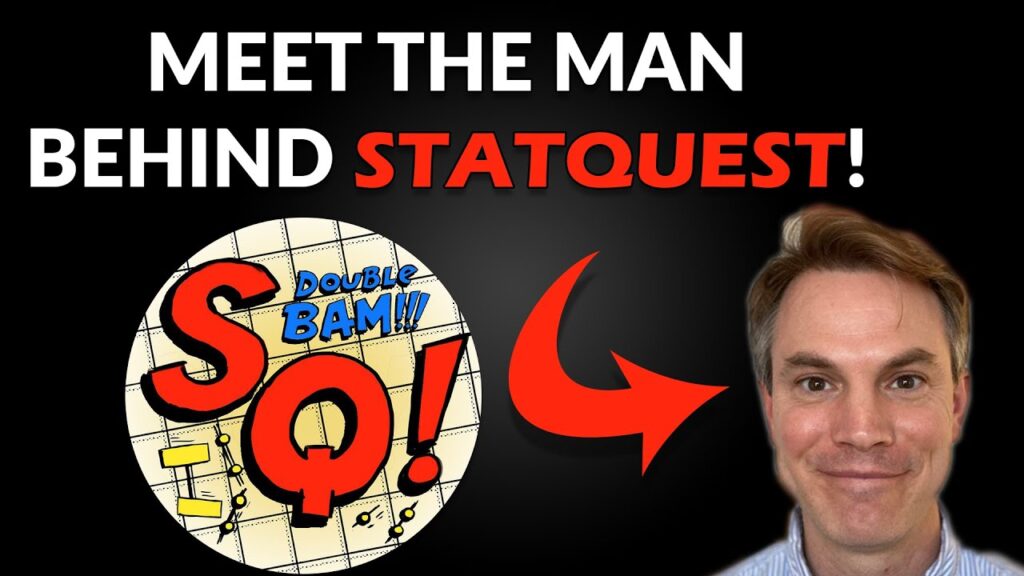
StatQuest — Master the Fundamentals
src: https://images.app.goo.gl/aWL71TzFu281buRW8
I would recommend Josh Starmer’s StatQuest channel to anyone who wants to understand the intimidating math and ML-theory into bite-size, highly visual lessons. The Machine-Learning playlist in particular is quite elaborative to cement all the basics concepts of ML like different ML Models like Logistic Regression, Random Forests, Neural Networks, all the way to the basics of Transformers you need to cover to delve deeper into the latest trending concepts like Generative AI and Large Language Models.
Link: https://www.youtube.com/@statquest
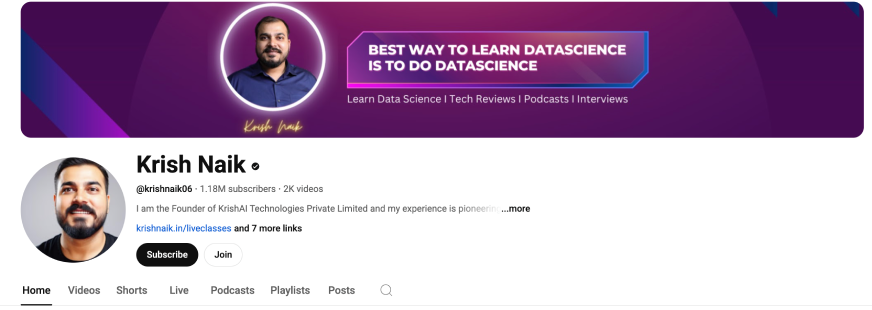
Krish Naik — Hands-On Machine Learning & GenAI
src: https://images.app.goo.gl/7EMHJzbjxX3QJi1g6
Sometimes, learning concepts without any hands-on work is boring. If you learn best by coding along, Krish’s channel is gold. Krish Naik’s channel shines for code-first tutorials on deep learning, transformers, and the latest GenAI projects. Many videos now showcase LangChain, LangGraph, Vector Databases, and Retrieval-Augmented Generation (RAG) patterns you’ll reuse in real projects.
Link: https://www.youtube.com/@krishnaik06
Codebasics — Data Science & Analytics Projects
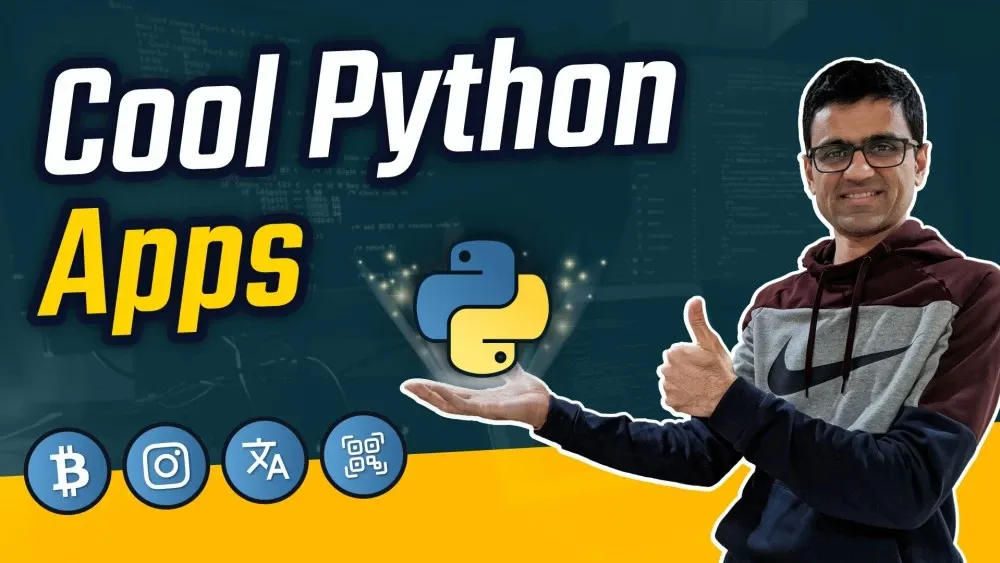
If your career goals lean toward analytics or full-stack data science, Codebasics offers end-to-end build-alongs — Power BI and Tableau dashboards, Data pipelines, and beginner RAG chatbots often in just a single video session.
Link: https://www.youtube.com/@codebasics
Must-Know Frameworks for 2025
LangChain
LangChain simplifies connecting large language models to tools, databases, and APIs, letting you chain prompts, memory, and retrieval into production-ready apps. Their official site and docs include starter templates plus LangServe for quick deployment
Link: https://python.langchain.com/docs/tutorials/
LangGraph
LangGraph is the next-gen orchestration layer on top of LangChain. It lets you model agent workflows as cyclic graphs instead of brittle DAGs, giving you fine-grained control, state management, and persistence out of the box
Resources: Watch LangChain Academy’s free LangGraph crash-course videos or Krish Naik’s multi-agent playlist to see real-world graphs for research bots and RAG pipelines
Link: https://academy.langchain.com/courses/intro-to-langgraph
Medium Blog Link: https://medium.com/ai-simplified-in-plain-english/meet-langgraph-the-ultimate-event-planner-for-your-ai-agents-ac4369d0b2fa
LlamaIndex
For anyone building private-data copilots, LlamaIndex offers connectors, indexing, and query engines that plug directly into LangChain or run standalone. The documentation walks you from simple directory loaders to complex graph indices and vector search. The Agents Course in HuggingFace (mentioned below) also has a section dedicated to the Llama Index Framework.
Link: https://docs.llamaindex.ai/en/stable/
Hugging Face Certifications Worth Your Time

src: https://images.app.goo.gl/YFyD6iRm214ZNVrs7
1. LLM Course — A structured, self-paced roadmap from tokenization and types of Transformers to fine-tuning LLMs. I would recommend taking this course directly after completing the Statquest ML Playlist if your aim is to dive into LLMs and their applications.
2. Agents Course — This course taught me everything I needed to know about Agents and with all the possibilities of using it out there, how it is gonna dominate the AI industry in the coming years. This course teaches tool-calling agents and grants a certificate after you ace the Unit-1 quiz; perfect prep for LangChain’s agent abstractions. You can also get a certificate of completion for the entire course if you complete the task given at the end and submit the solution on HuggingFace space. You need to get a score oof 30 for a successful completion of the task.
3. MCP Course — Covers the emerging Model Context Protocol so your apps can interoperate with external tools and data sources; includes end-to-end Gradio workflows and a free certificate on completion.
Links to Hugging Face courses: https://huggingface.co/learn
Build, Break, Repeat: Project-First Learning
No playlist or course will replace debugging your own code. Pick a small but complete idea — say, a PDF-chatbot for your lecture notes — and implement it twice: once with LangChain + LlamaIndex and once with pure Hugging Face Transformers. You’ll force-multiply your comprehension of both ecosystems while discovering which abstractions save (or cost) time in production.
Bonus Tool: Cursor AI IDE
src: https://images.app.goo.gl/yythMHQCUpbQSyf96
As projects scale, setup friction kills momentum. Cursor, an AI-powered fork of VS Code solves boilerplate by autocompleting multi-line edits, chatting over your codebase, and even running shell commands after your approval. If you are someone like me who uses Visual Studio Code all the time, try using Cursor AI this time for a change and let me know how it went. Pair Cursor with the LangChain or Hugging Face extensions, and you’ll iterate noticeably faster.
Final Thoughts
2025 is a builder’s playground. Learn the theory with StatQuest, practice with Krish Naik and Codebasics, prototype with LangChain + friends, back it up with Hugging Face badges, and code everything in Cursor. Keep the loops tight, the projects small, and the momentum high. By December, you’ll have both the skills and a portfolio to prove it.