Behind every successful conference, wedding, or corporate gathering is a sophisticated coordination system that manages multiple teams, tracks countless details, and ensures everything happens at the right time. Imagine if you could bring that same level of orchestration to artificial intelligence applications. That’s exactly what LangGraph does. It’s like having a master event coordinator for AI agents. In this article we try to simplify the concepts of LangGraph using the analogy of an Event Planning scenario.
Contents of this article are as follows
- What is LangGraph
- Architecture and Features
- Benefits of using LangGraph
- Real-World Applications
- Generic Template to get started using LangGraph
What is LangGraph?
LangGraph is a powerful framework developed by LangChain that enables developers to build and manage complex AI workflows using multiple intelligent agents working together. It is like a sophisticated event management platform, but instead of coordinating catering teams and venue managers, it coordinates specialized AI agents that each have unique skills and responsibilities. LangGraph provides the infrastructure needed to orchestrate multiple AI agents in complex, multi-step workflows. The framework uses graph-based architectures to model and manage intricate relationships between various components of an AI workflow, much like how event planners create detailed timelines showing how different tasks and teams interconnect.
The Master Agent
In any well-organized event, there’s always a master coordinator who doesn’t handle every task personally but ensures all teams work toward the same goal. This coordinator maintains the big picture view, makes critical decisions, and ensures seamless communication between specialized teams. In LangGraph, the Master Agent plays this exact role orchestrating the entire workflow and ensuring all specialized agents contribute effectively toward completing complex tasks.
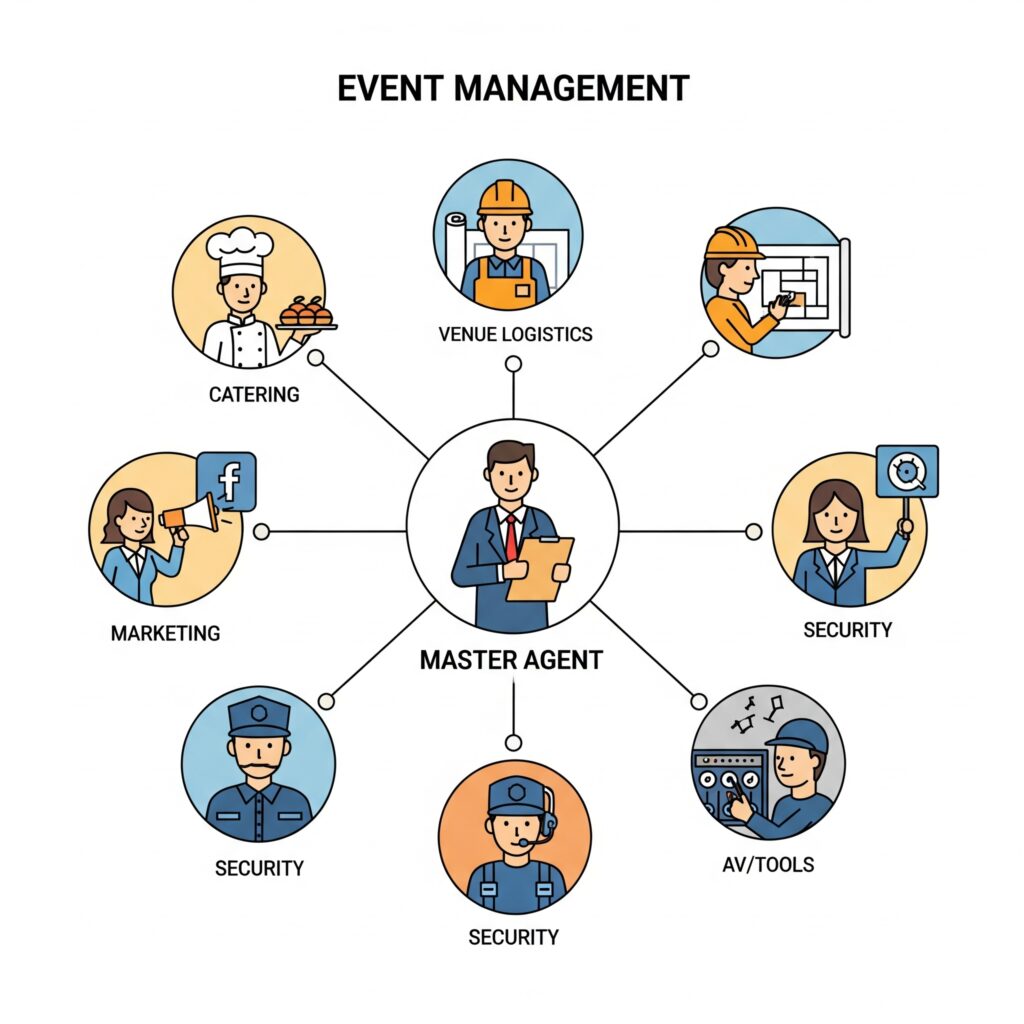
Event management requires diverse expertise working in harmony. The venue manager handles logistics, the catering team manages food service, marketing promotes the event, security ensures safety, and guest services creates memorable experiences. Similarly, LangGraph employs specialized agents: Research Agents gather and analyze information, Content Agents create and refine materials, Review Agents ensure quality, Tool Agents execute technical tasks, and Human-in-the-Loop Agents manage oversight.
Architecture
Graph- Based Architecture
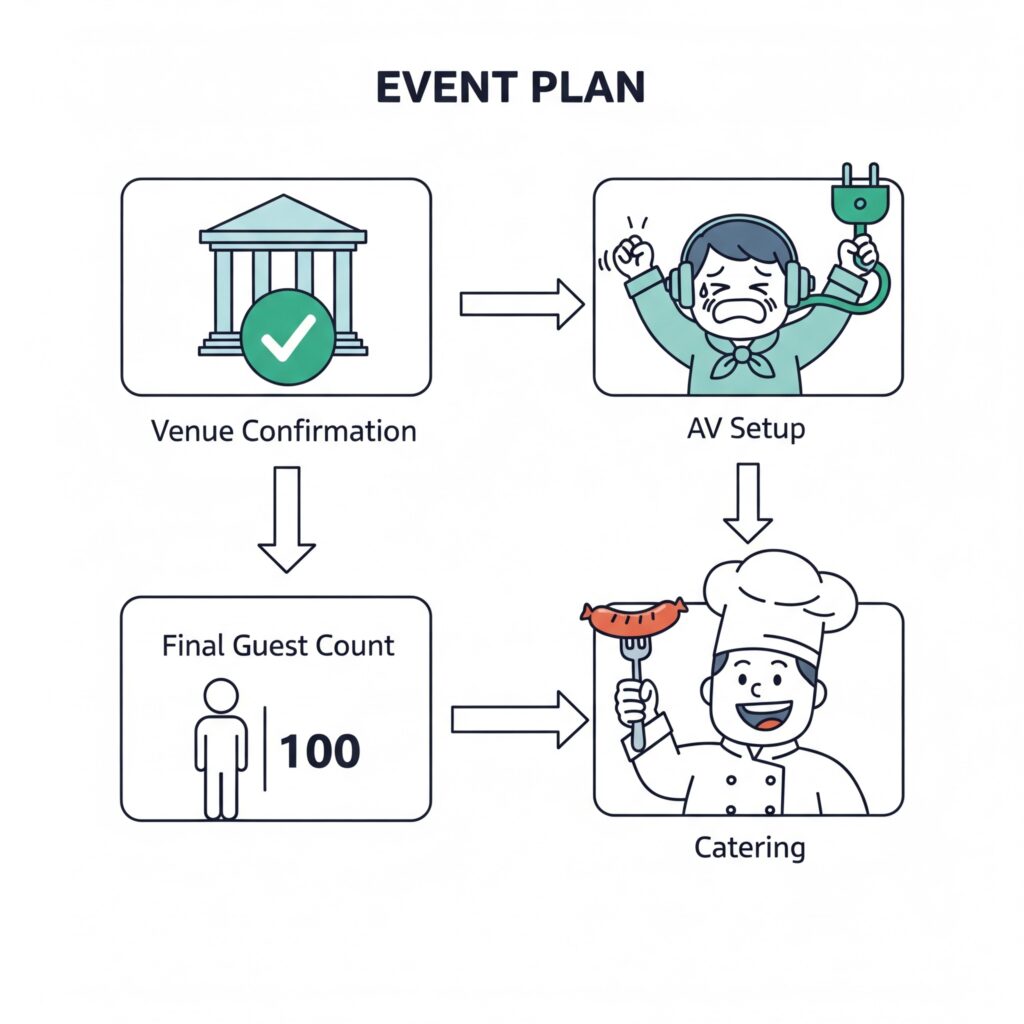
LangGraph organizes AI workflows as interconnected nodes and edges, similar to how event planners create master timelines showing task dependencies. Just as catering depends on final guest counts and AV setup requires venue confirmation, LangGraph visualizes how different agents and tasks relate to each other. This graph structure provides clear workflow visualization and easier troubleshooting, much like having a comprehensive event plan that shows every connection and dependency.
Beyond the Traditional DAG Architecture
Traditional LangChain workflows are built on directed acyclic graphs (DAG), which provide linear execution patterns but lack the flexibility needed for complex agent interactions. LangGraph addresses this limitation by introducing cyclic graph capabilities while maintaining the structured approach of graph-based architectures.
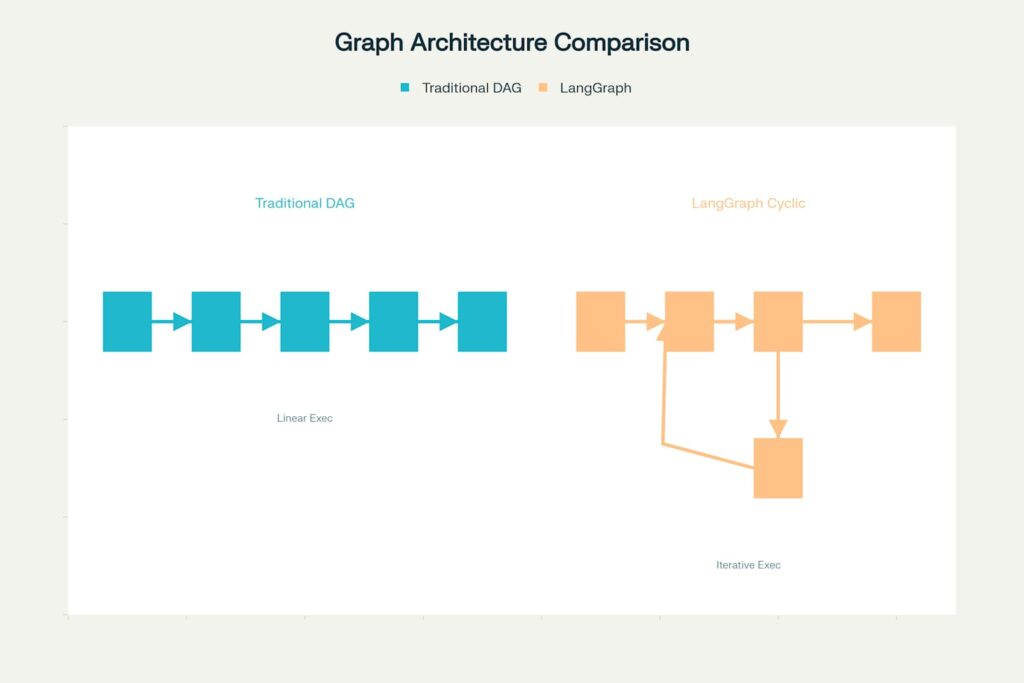
The fundamental difference between traditional DAG-based systems and LangGraph lies in execution flexibility. While DAGs enforce a single-pass, linear execution model, LangGraph’s architecture supports iterative processing, conditional branching, and dynamic decision-making through its cyclic graph capabilities.
Nodes
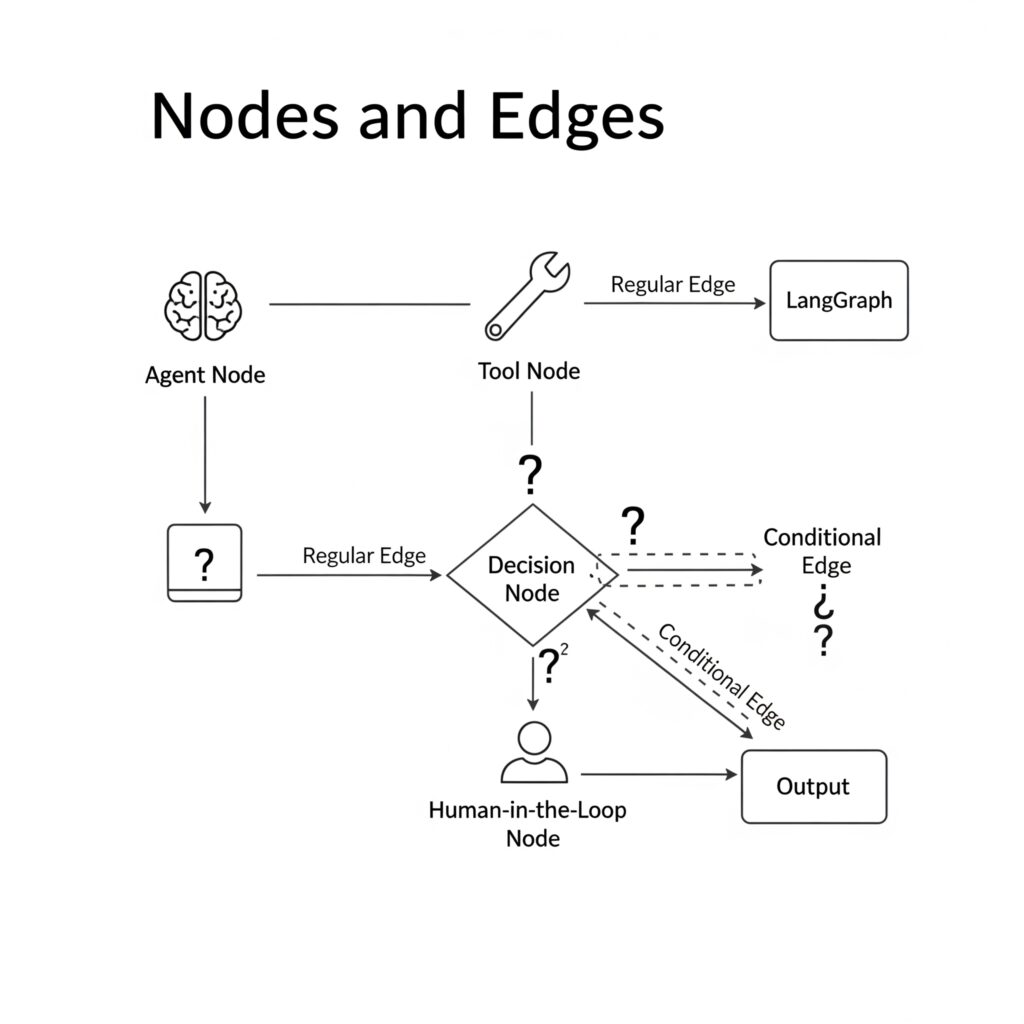
Nodes in LangGraph can represent various types of computational units including agent nodes for reasoning, tool nodes for external actions, decision nodes for routing logic, and human-in-the-loop nodes for manual intervention. This modular design enables developers to compose complex workflows from reusable components.
Edges and Flow Control
LangGraph supports two primary types of edges that define the flow of execution between nodes. Regular edges provide unconditional transitions between nodes, similar to traditional DAG connections. Conditional edges, however, represent LangGraph’s key innovation, enabling dynamic routing based on the current state of the application.
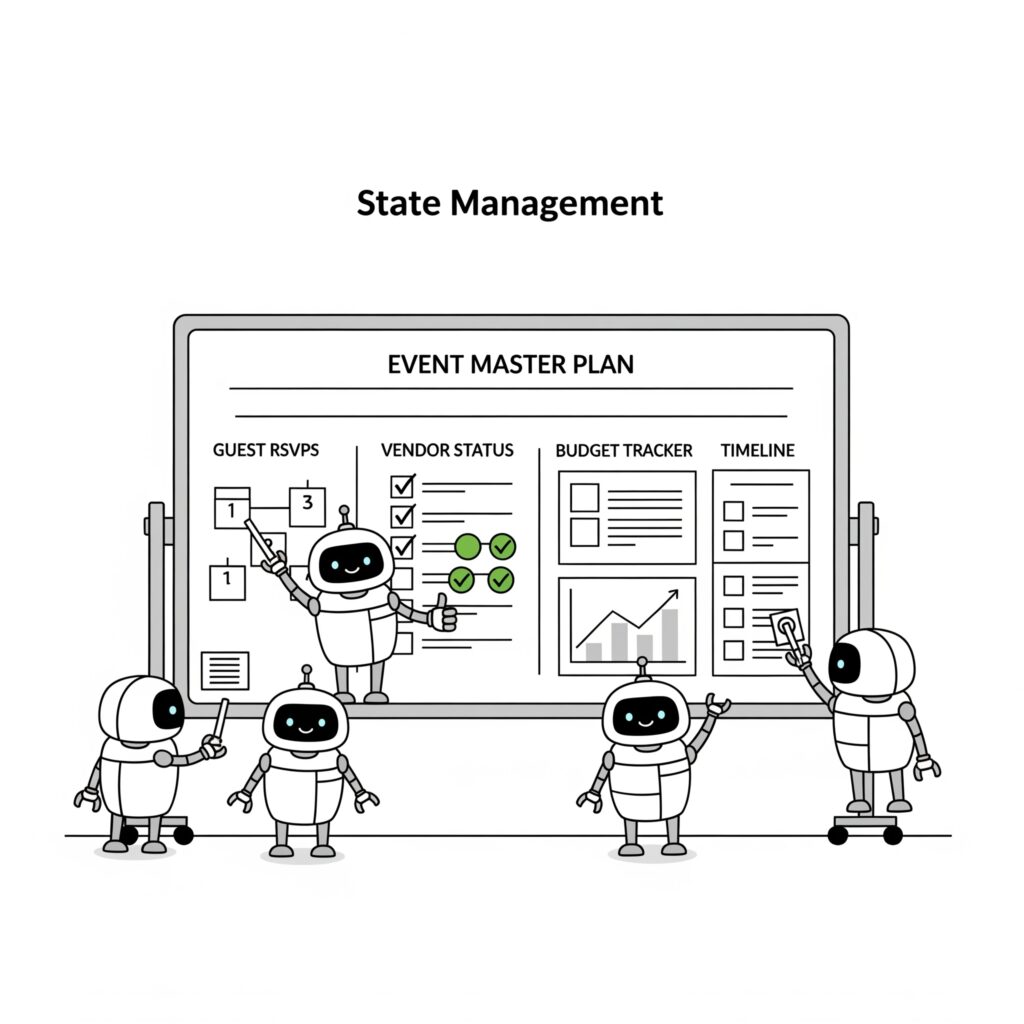
State Management
Effective event management requires maintaining a central information hub that tracks every detail — guest RSVPs, vendor confirmations, budget changes, and timeline updates. LangGraph’s state management works similarly, keeping track of all information and context throughout the AI workflow. This ensures agents always have access to the latest information and can build upon previous work, just like how event coordinators maintain updated status reports for all teams.
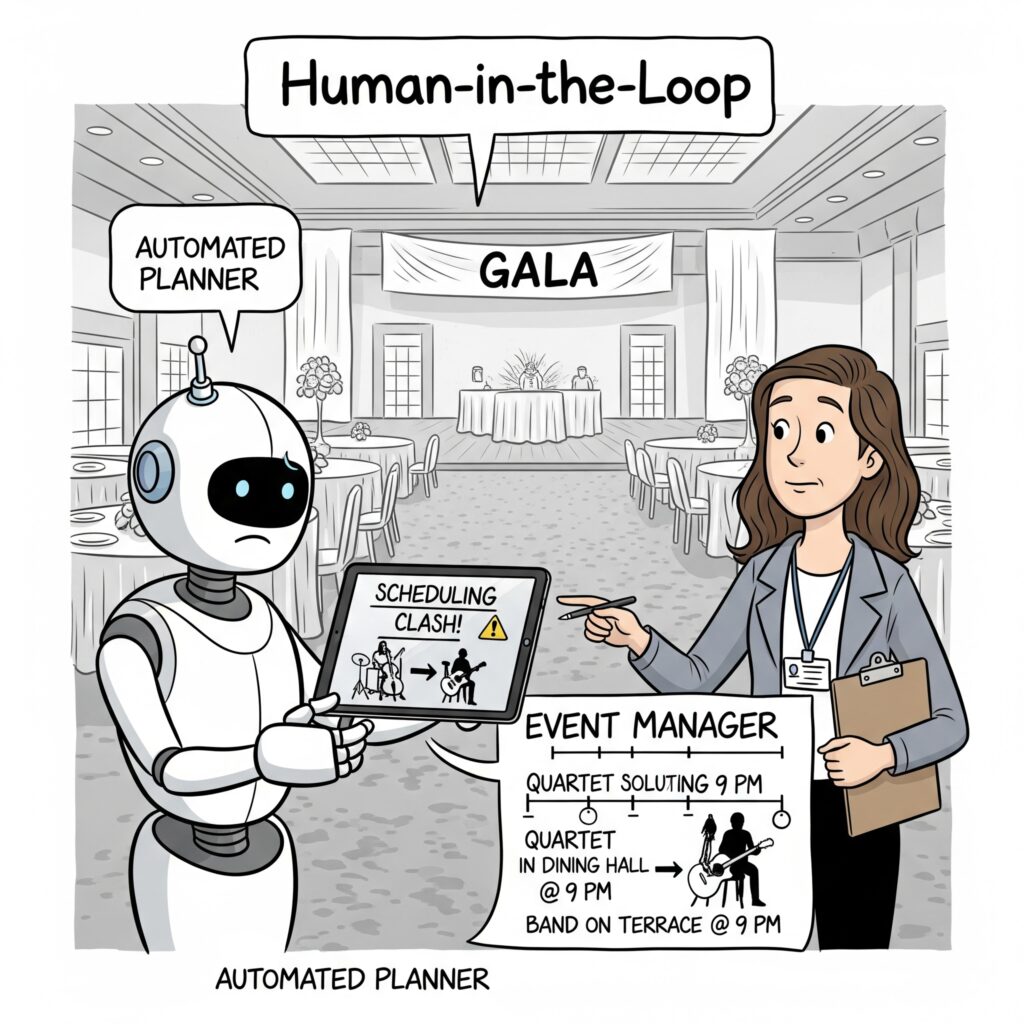
Human-in-the-Loop
Event coordinators must intervene when critical decisions arise or unexpected situations occur. LangGraph’s human-in-the-loop capabilities allow people to intervene at any point in the AI workflow to approve actions, provide guidance, or course-correct when needed. This creates safer AI deployment with human oversight capabilities, similar to how experienced event managers can step in during emergencies or when important decisions require human judgment.
Multi-Agent coordination
Successful events require different teams working simultaneously while staying coordinated. While marketing promotes the event, catering finalizes menus, and security plans crowd management. LangGraph coordinates multiple AI agents working on different aspects of tasks simultaneously, sharing information and coordinating efforts seamlessly. his approach handles complex tasks requiring multiple specialized skills, just like complex events need diverse expertise working together.
Real-time Updates
During events, coordinators receive constant updates: “catering is 90% ready,” “guests arriving on schedule,” “AV check complete”. LangGraph provides similar real-time feedback on agent activities, allowing users to see progress and reasoning as it happens. This creates better user experiences with transparent progress tracking, similar to how event dashboards keep everyone informed about current status.
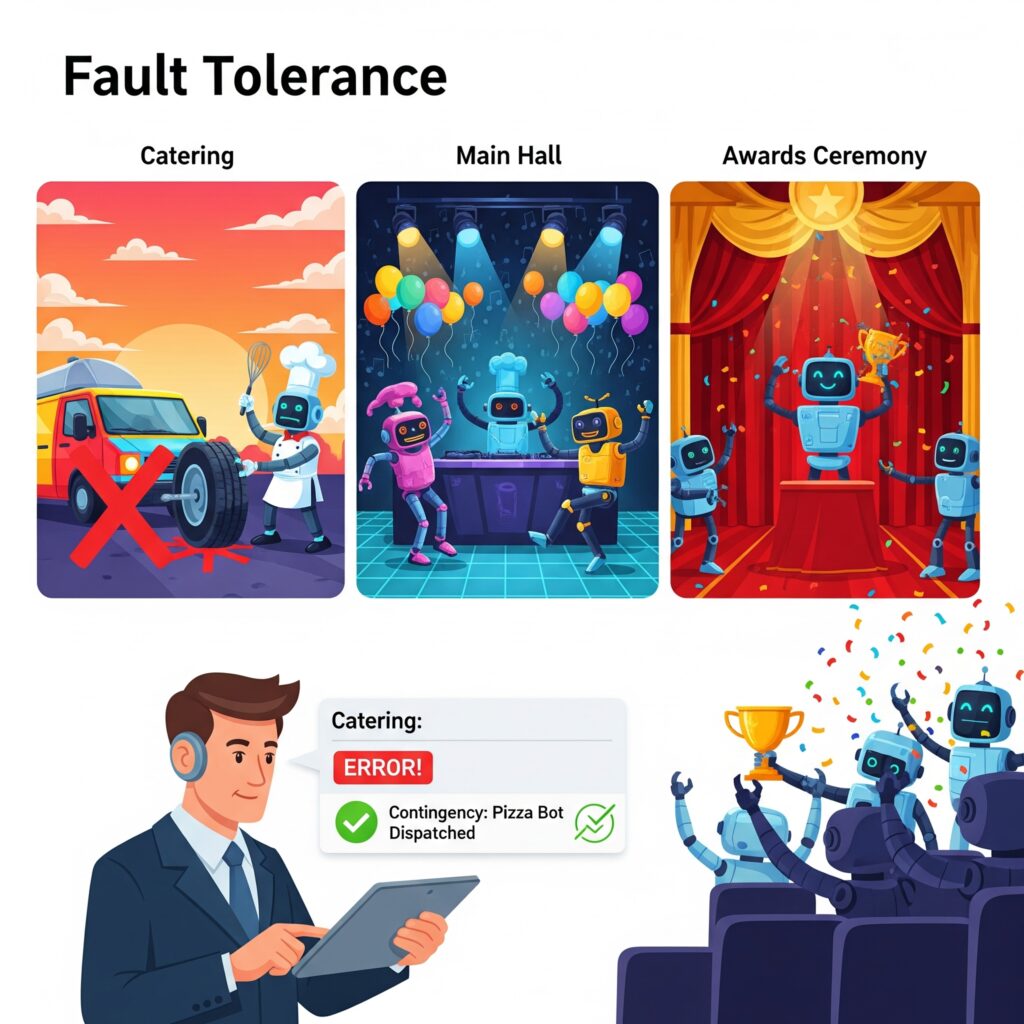
Fault-Tolerance
Professional event managers always have contingency plans when vendors cancel or technical issues arise. LangGraph handles failures gracefully, can restart from specific checkpoints, and implements fallback strategies when things don’t go as planned. This creates robust applications that handle unexpected situations, just like how experienced event coordinators ensure “the show must go on” regardless of challenges.
Applications in Real-World
- Content Creation
- Customer Service
- Research and Analysis
Benefits of Choosing LangGraph for your AI Applications
- LangGraph ensures consistent performance like having experienced event coordinators managing your operations. It provides scalability to handle everything from simple tasks to complex multi-step processes, transparency with clear visibility into every workflow step, and control with the ability to intervene and adjust as needed. Companies using LangGraph report improved reliability in AI applications and better alignment with business objectives.
- LangGraph offers flexibility to build custom workflows for specific needs, modularity to reuse agents across different applications, easy debugging to identify and fix issues, and seamless integration with existing systems and tools. The framework’s low-level primitives provide developers with fine-grained control while maintaining simplicity for common use cases. Developers appreciate the comprehensive state management and debugging capabilities that make complex AI applications more manageable.
- Users benefit from higher quality outcomes through multiple specialized agents working together, faster processing through parallel execution, personalization as agents remember and adapt to preferences, and reliability through robust error handling. The streaming support provides transparent progress tracking, making AI applications feel more responsive and trustworthy. Users report greater satisfaction with AI applications built using LangGraph compared to traditional single-agent approaches.
How to Get Started
Here is a systematic approach on how to get started with building AI applications using LangGraph
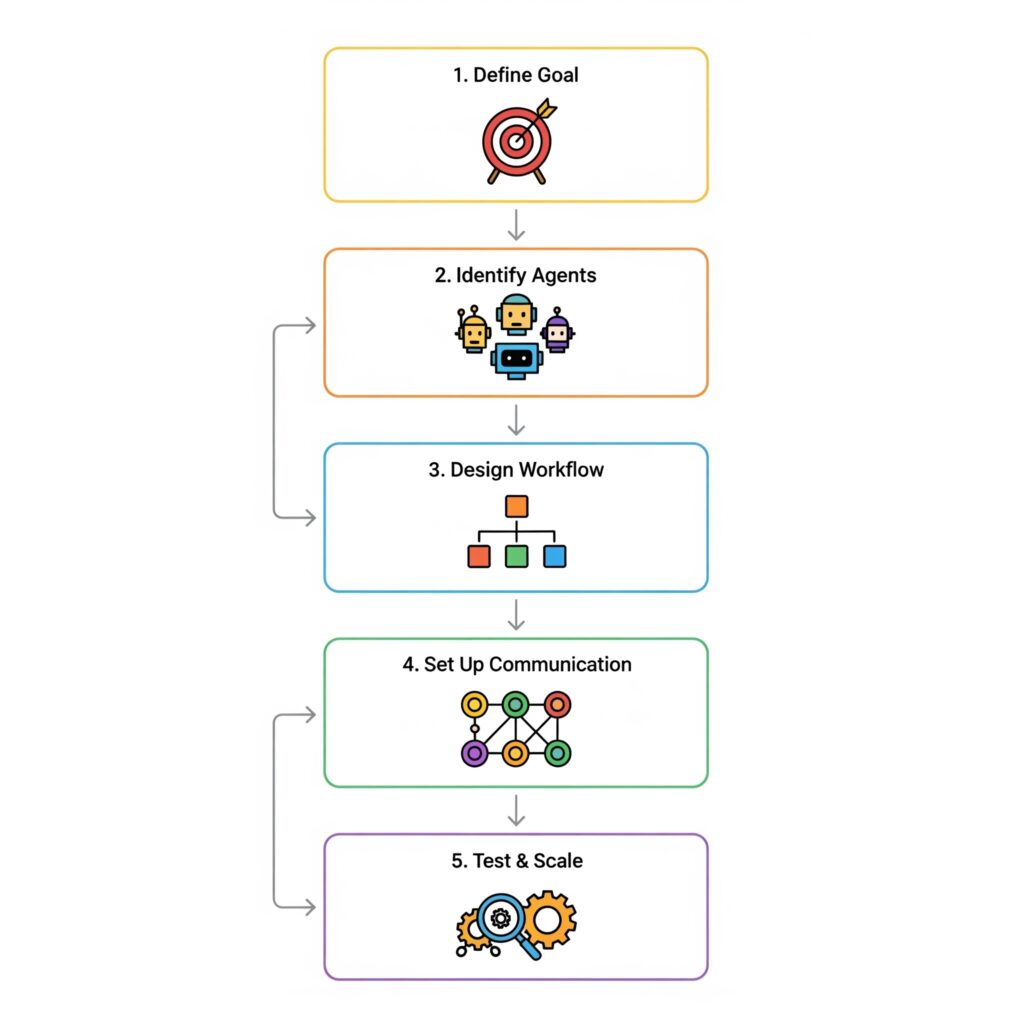
- Define your goal and what you want to achieve
- Identify required agents and their specialties,
- Design the workflow showing how agents should interact
- Set up communication protocols for information sharing
- Test with small implementations before scaling up
Conclusion
The framework’s emphasis on human-in-the-loop capabilities, comprehensive state management, and robust error handling positions it well for enterprise adoption where reliability and control are paramount.
By thinking of LangGraph as an AI event management system, developers and business users can appreciate its power to orchestrate complex workflows, coordinate specialized agents, and deliver consistent, high-quality results.
If you wanna dive deep into the coding aspect of LangGraph and understand the concepts in depth, checkout the Agents Course by HuggingFace or the LangGraph documentation by LangChain.
If you enjoyed this article, checkout my blog on Llama Index which is another framework for building AI based applications. While LangGraph offers a variety of features and benefits especially control over the workflow, Llama Index is great at querying databases whether they are text based or pdfs.